In Home Disability Support That Fits Daily Life
July 8, 2026
In-Home Care Services Guide for Families
July 10, 2026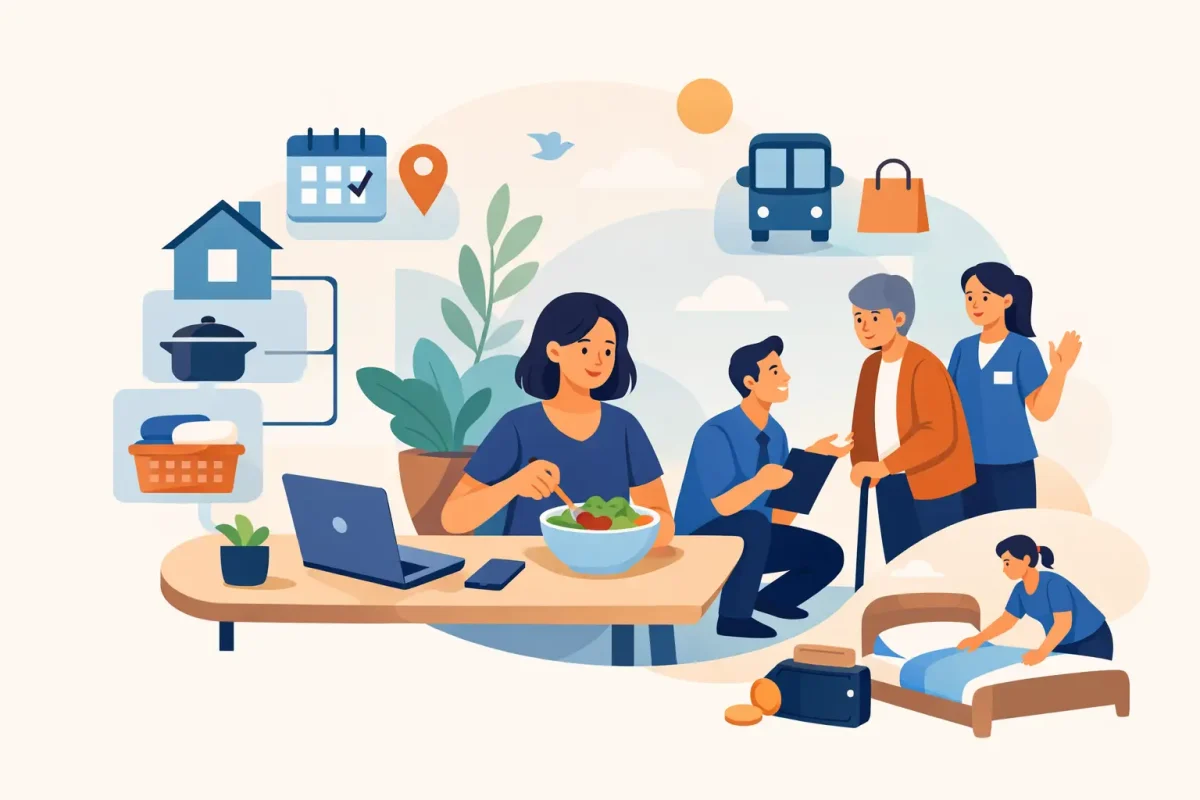
A good support worker does more than help get through the day. The right independent living skills support helps a person feel more capable in their own home, more confident in the community, and more in control of everyday life.
That can look different for everyone. For one person, it might mean learning how to plan meals, shop for groceries, and cook safely. For another, it could be building routines around personal care, medication, transport, or keeping the house in order. The goal is not to make someone fit a standard routine. It is to provide support that matches the person, their pace, and what matters most to them.
What independent living skills support really means
Independent living skills support is practical, hands-on assistance that helps people build or maintain the skills needed to live as independently as possible. It often sits in the small but important parts of daily life – getting ready in the morning, managing appointments, using public transport, preparing meals, handling money carefully, or keeping a safe and comfortable home.
For people living with disability and for older Australians, these tasks can become harder for many reasons. Mobility changes, memory concerns, reduced confidence, social isolation, or a recent change in health can all affect how manageable daily life feels. Support works best when it responds to those real challenges instead of assuming everyone needs the same thing.
That is why personalised care matters. Some people want support that teaches and encourages. Others need ongoing assistance because certain tasks are no longer safe or realistic to do alone. In many cases, it is a mix of both.
Why the right support can change daily life
When daily tasks start to pile up, the impact is rarely limited to the task itself. A person who is struggling with meals may also be losing confidence. Someone avoiding transport may start missing appointments or withdrawing from social activities. A home that has become hard to manage can begin to feel stressful rather than comforting.
The right support eases that pressure. It creates structure, reduces risk, and gives people more room to focus on their goals and wellbeing. Just as importantly, it protects dignity. Being supported with respect, rather than being rushed or talked over, makes a real difference to how care feels.
Families and carers often feel this change as well. Reliable support can reduce worry and create a stronger sense that their loved one is not just being looked after, but genuinely supported to live well.
Independent living skills support at home
Home is where most daily routines happen, so it is often the best place to build confidence. Support in the home can include assistance with showering and dressing, meal preparation, light household tasks, medication prompts, and creating routines that make the day more manageable.
What matters is how that support is delivered. Good support should never feel clinical or impersonal. It should feel natural, respectful, and steady. A support worker might cook alongside a participant rather than taking over, or help set up a simple cleaning routine that feels achievable. Small steps like these can help someone feel more settled and more capable over time.
There is also a safety aspect. If someone is skipping meals, forgetting medication, or finding household tasks physically difficult, early support can prevent larger problems later. In that sense, independent living support is not only about skill-building. It is also about creating a safer and more sustainable way to live at home.
Building confidence in the community
Independence does not stop at the front door. Many people want support not only with home routines, but with being part of community life again.
That might involve attending appointments, going shopping, joining social activities, visiting local places, or learning to travel with more confidence. For some people, the biggest hurdle is not ability but anxiety. Having a familiar support worker alongside them can make new routines feel possible.
Community-based support can also improve consistency at home. A person who learns how to shop with support, for example, may feel more confident planning meals. Someone who feels comfortable attending activities may experience less isolation and better emotional wellbeing. These gains are connected. Daily living skills are not separate from quality of life – they are part of it.
What personalised support should look like
No two people need support in exactly the same way. Age, disability, health conditions, home environment, personality, and goals all shape what effective support looks like.
A personalised service starts by listening. What does the person want to do more independently? What feels difficult right now? What kind of support feels comfortable, and what does not? These questions matter because they keep the person at the centre of care.
It is also important to be realistic. Some goals can be built gradually with the right encouragement. Others may need ongoing practical assistance rather than a training-based approach. There is no failure in that. Independence is not about doing everything alone. It is about having the right support in place to live with dignity, choice, and as much control as possible.
Consistency matters too. Seeing familiar faces can make routines easier, reduce stress, and build trust over time. For many participants, that relationship is what turns support from a service into something that genuinely feels helpful.
When families and coordinators are looking for the right fit
If you are a family member, carer, or support coordinator, it can be hard to assess whether a provider is truly suited to a person’s needs. Many services sound similar on paper. The difference is often in how flexible, responsive, and person-centred the support really is.
It helps to look for a provider that can adapt as needs change. Someone may start with help around shopping and meal preparation, then later need support with personal care or transport as well. Having a team that can respond to those changes creates more stability.
Communication is another key part of the fit. Families and coordinators usually need confidence that support is being delivered reliably and respectfully. Clear updates, dependable scheduling, and a willingness to work alongside the participant’s broader care team all make a difference.
For people across Newcastle, Kurri Kurri, and nearby NSW communities, local support can also be valuable. A provider who understands the area, the community, and the practical realities of local service delivery can often offer a more responsive and grounded experience.
Choosing independent living skills support that feels right
The best support is not always the most complex. Often, it is the support that is consistent, calm, and shaped around everyday life.
When choosing independent living skills support, it helps to ask practical questions. Does the provider take time to understand personal goals? Can support be tailored rather than delivered as a standard package? Are workers matched thoughtfully? Is the focus only on tasks, or also on confidence, dignity, and participation?
The answers matter because support becomes part of a person’s routine. It should feel respectful and comfortable, not disruptive. A good provider recognises that trust is built in ordinary moments – a worker arriving on time, speaking kindly, following preferences, and helping someone feel at ease in their own home.
At Acme Living Care Australia, that is the heart of how support should feel: personal, dependable, and shaped around the individual rather than the roster.
Some people need a little help to stay on track. Others need regular hands-on assistance to manage safely at home and stay connected to their community. Both are valid. Both deserve care that feels human.
The right support does not take over a person’s life. It helps life feel more manageable, more comfortable, and more like home. If daily tasks have started to feel harder, that is often the right time to ask what kind of support could make things easier.