

Community Participation Support NDIS Explained
July 3, 2026
Medication Assistance at Home Explained
July 5, 2026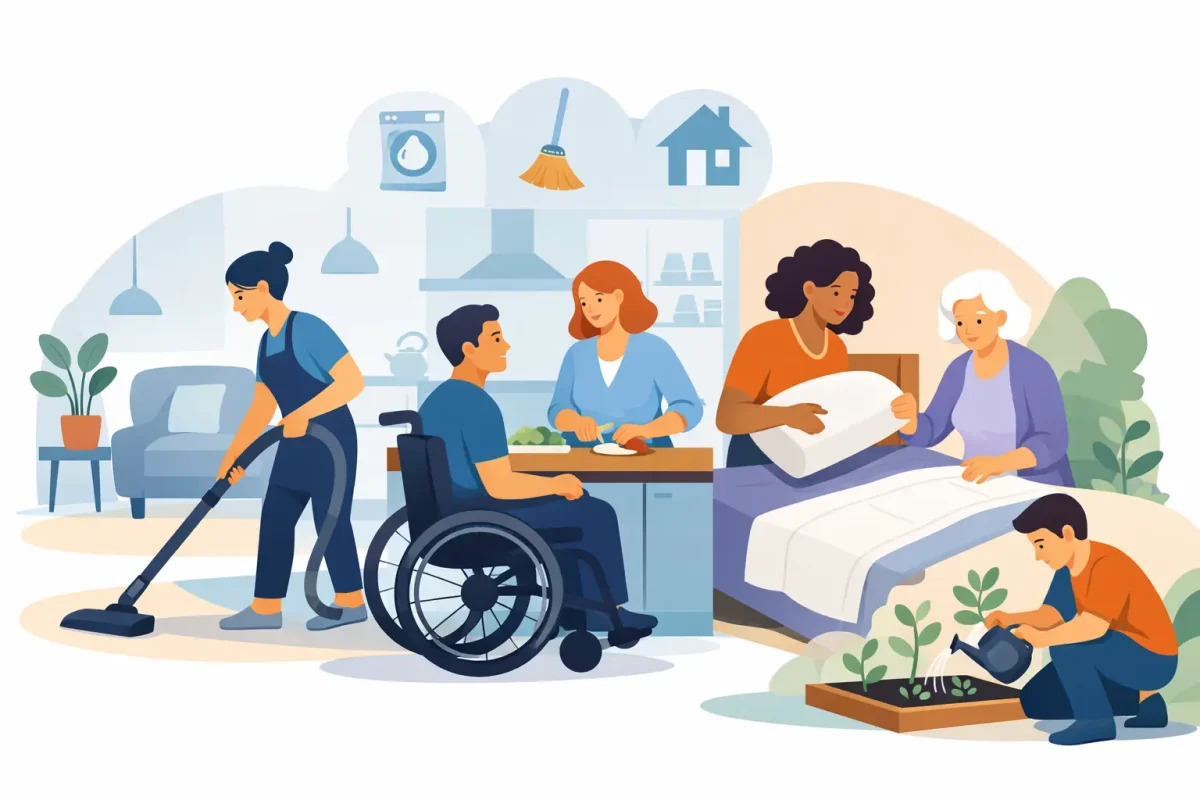
A clean kitchen, fresh washing and meals ready for the week can make home feel calm and manageable. When those everyday jobs become difficult because of disability, injury or changing health needs, NDIS household tasks support can make a real difference. It is not about taking over your life. It is about giving you the right level of help so your home stays safe, comfortable and aligned with how you want to live.
What NDIS household tasks support can include
Household support under the NDIS usually covers practical help with everyday jobs you may not be able to do safely or consistently on your own. That can include vacuuming, mopping, washing dishes, changing bed linen, laundry, ironing, meal preparation and general tidying. In some cases, it may also involve grocery shopping support or help to keep key living areas hygienic and usable.
The exact tasks depend on your plan, your goals and what is considered reasonable and necessary for your situation. Some people need regular weekly help to keep on top of cleaning and washing. Others need shorter-term support after illness, hospital discharge or a change in mobility. For participants with more complex needs, household assistance may be one part of a broader daily living routine that also includes personal care, meal support and community access.
Why this support matters beyond a tidy house
When people hear “household tasks”, it can sound simple. In reality, these jobs affect safety, health and independence every day. A cluttered floor can increase fall risk. Unwashed clothes and bedding can affect comfort and hygiene. Meals become harder to manage when the kitchen is not set up properly or energy levels are low.
Good support does more than keep the house presentable. It can reduce stress, preserve energy for work, family or therapy, and help people stay in their own home for longer. For families and carers, it can also ease pressure and create a more sustainable routine.
That is why the best support is not rushed or generic. It should reflect the person, the home and the daily reality of what needs to happen for life to run more smoothly.
How NDIS household tasks support is tailored
No two homes work the same way. One participant may want help with heavier cleaning because fatigue makes it hard to keep up. Another may want support that focuses on meal prep and laundry so they can continue doing lighter jobs themselves. Someone else may need a support worker to assist them to do the task, rather than doing it for them, as part of building confidence and routine.
This is where person-centred support matters. A provider should ask practical questions. Which tasks are hardest? What would make home feel easier to manage? Are there preferred routines, products or times of day? Is the goal to maintain current independence, improve daily skills or reduce risk at home?
The answers shape the service. The right support respects your preferences and works around your life, not the other way around.
Assistance or capacity building – sometimes it depends
One of the most important parts of household support is understanding whether you need direct assistance, skill-building, or a mix of both. Some participants want a worker to complete tasks because their disability means doing them independently is unsafe or unrealistic. Others want support to learn a system for meal planning, clothes washing or home organisation so they can do more for themselves over time.
Neither approach is better in every case. It depends on your goals, functional capacity and what is practical. On some days, direct help is the right answer. On other days, being supported to participate in the task may be more valuable. A thoughtful provider will recognise that needs can change and that flexibility matters.
What families and support coordinators should look for
If you are helping someone find household assistance, reliability is just as important as the task list. The support needs to be consistent, respectful and easy to coordinate. Missed services or constant staff changes can make daily life harder, not easier.
It helps to look for a provider that takes time to understand routines and can match support workers carefully. Trust matters in the home. Participants are more comfortable when they know who is coming, what support is being provided and how that support fits into the broader plan.
Clear communication also makes a difference. Families and coordinators should be able to understand what is included, how schedules work and how the provider responds if needs increase or circumstances change.
Everyday examples of how support can work
For one person, household support might mean a worker comes twice a week to assist with laundry, surfaces, dishes and changing bed linen. That simple routine can keep the home manageable and free up energy for appointments, parenting or community participation.
For another, support might focus on the kitchen. A worker helps prepare a few meals, labels containers and leaves the fridge organised for the week ahead. That can reduce skipped meals and make daily living feel less overwhelming.
Some participants use this support alongside personal care or transport. For example, a morning shift might include helping someone get ready for the day, putting on a load of washing and making sure the home is safe before heading out to an appointment. In these situations, household tasks are part of a more complete picture of living well at home.
A good provider should support dignity, not just chores
Being supported at home is personal. The way a worker enters your space, speaks to you and handles routine tasks can affect how comfortable you feel. Good care should feel respectful and natural. It should preserve dignity and make home feel like home.
That means listening to how you like things done, respecting privacy and understanding cultural or household preferences. It also means recognising that some days are easier than others. A caring support worker notices when energy is low, when routines need to shift and when reassurance is just as important as practical help.
At Acme Living Care Australia, that relationship-led approach is a big part of what makes support more meaningful. Household assistance is practical, but it is also personal. The right match between participant and worker can make daily routines feel calmer, safer and more consistent.
Questions to ask before starting NDIS household tasks support
Before services begin, it helps to clarify what you want from the support. Think about which jobs are essential, which ones are most physically demanding and what a good week at home would look like. If you are not sure, that is okay too. A provider should be able to talk it through with you.
You may want to ask how tasks are scheduled, whether support can be adjusted over time and how the team handles changes in health or capacity. If continuity is important, ask how staff matching works. If the participant wants to be involved in tasks rather than having everything done for them, make that clear from the start.
These conversations matter because household support works best when expectations are understood early and reviewed as needs change.
When household support becomes part of bigger independence goals
For many participants, help at home is not just about getting through the week. It is part of a larger goal to live with more independence, confidence and stability. When the basics are covered, people often have more capacity to focus on work, study, social connection, therapy goals or simply enjoying their own space.
That is why practical support should never be undervalued. A load of washing, a clean bathroom or a prepared meal may seem small on paper, but in daily life they can remove barriers that affect wellbeing across the board.
If you or someone you care for is finding home life harder to manage, the right support can ease pressure without taking away choice. It can be shaped around your routines, your goals and the kind of help that feels right for your household. Sometimes the best support starts with the everyday tasks that make everything else possible.