

Personal Care Services List for Home Support
July 1, 2026
Community Participation Support NDIS Explained
July 3, 2026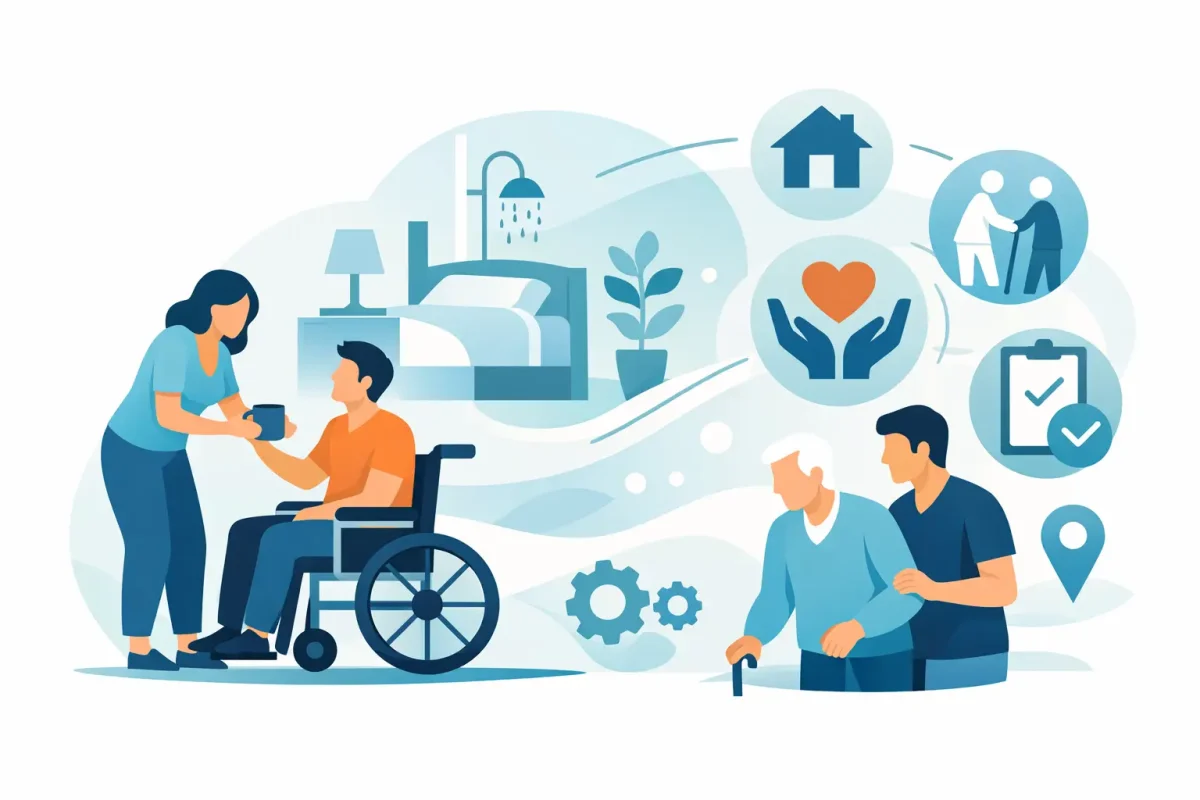
Some days, it is the small things that make the biggest difference – getting ready in the morning without stress, having meals prepared safely, or knowing there is someone reliable to help you get out into the community. That is where daily living assistance NDIS support can have a real impact. It is not about taking over a person’s life. It is about making everyday life safer, more manageable and more independent in a way that feels respectful and personal.
For many participants and families, the challenge is not knowing support exists. It is knowing what that support can actually look like in real life, how flexible it is, and whether it can be shaped around the person rather than a rigid service list. Good support should fit into daily routines naturally and help care feel like home.
What daily living assistance NDIS support includes
Daily living assistance covers the everyday tasks that allow someone to live well at home and stay connected to their community. The exact support depends on the participant’s goals, support needs and NDIS plan, but it often includes personal care, help around the home, assistance with meals, medication prompts, transport, and support to attend appointments or social activities.
For one person, that may mean help with showering, dressing and morning routines. For another, it may involve meal preparation, household cleaning, shopping and support to build confidence using public transport. Some people need a little help at key times of the day, while others require more regular or complex care across mornings, evenings or overnight.
What matters most is that support is tailored. Two participants may both receive assistance with daily living, but the way that support is delivered can look very different. Age, mobility, communication, health needs, personal preferences, culture and home environment all shape what good support looks like.
Why daily living assistance NDIS matters for independence
There can be a misunderstanding that asking for help means losing independence. In practice, the opposite is often true. The right support can make it easier for a person to stay in their own home, keep their routine, make their own choices and continue doing the things that matter to them.
When daily tasks become difficult, people can start to feel isolated, frustrated or unsafe. A home that once felt comfortable may begin to feel hard to manage. That pressure can also affect family members and carers, especially when support needs are increasing or changing.
Daily living assistance can reduce that pressure. It creates structure where routines have become hard to maintain and gives participants the support to keep building skills, staying active and participating in everyday life. Sometimes the goal is direct help. Sometimes the goal is to gradually build confidence so the person can do more for themselves over time. Often, it is a mix of both.
There is no single definition of independence. For one participant, it may mean preparing meals with supervision. For another, it may mean having reliable support for personal care so they can conserve energy for work, study or community activities. Good support recognises that independence looks different for everyone.
How support is tailored to everyday life
The most effective care plans are built around the person’s real routine, not a generic checklist. That means understanding what a normal day looks like, where support is needed, what the person prefers, and how to provide assistance in a way that feels comfortable and consistent.
A participant might want support workers who understand how they like their morning routine managed, how they communicate, what foods they enjoy, or what helps them feel confident when leaving the house. These details are not minor. They are often the difference between support that feels clinical and support that feels respectful.
This is also where continuity matters. Having familiar workers can build trust, reduce anxiety and make daily care feel more natural. Families and support coordinators often notice the difference quickly when a participant has support from people who know their preferences and genuinely take the time to understand them.
Support should also be flexible enough to change. Needs can shift after a hospital stay, with changes in mobility, or when a participant wants to work towards a new goal. A service that adapts is often far more valuable than one that offers the same routine every week regardless of what is happening in the person’s life.
Common supports under daily living assistance NDIS
Many participants use this type of support for personal care such as showering, grooming, dressing and toileting. Others need help with meal planning, cooking and making sure food choices are practical, safe and suited to their health needs. Household support can include tidying, washing clothes, changing bed linen and keeping living areas safe and manageable.
Medication assistance is another common part of daily support, especially where prompts or supervision help a person stay on track. Transport can also play an important role, whether that means getting to medical appointments, shopping, social outings or local activities.
Some supports are more skill-focused. A participant may want help learning to prepare simple meals, improve household routines, build confidence with budgeting, or become more independent when out in the community. In these cases, support is not only about getting through the day. It is about building capacity for the future.
What participants and families should look for in a provider
Not every provider delivers support in the same way. On paper, two services may appear similar, but the day-to-day experience can be very different. Reliability matters. So does communication, especially when families, carers or support coordinators are involved in planning and reviewing care.
It helps to ask practical questions. Will support be tailored to the participant’s goals and preferences? Is the service flexible if routines change? Can the provider offer consistent staff where possible? Are they experienced in supporting people with more complex needs as well as everyday personal and household tasks?
It also helps to consider how a provider makes the person feel. Good care should protect dignity, not reduce it. Participants should feel heard, respected and included in decisions about their own support. Families should feel reassured that their loved one is in safe and capable hands, without feeling shut out of communication.
For people in Newcastle, Kurri Kurri and surrounding parts of NSW, local knowledge can be another advantage. A provider who understands the area, the community and the practical realities of local service delivery can often respond more quickly and provide support that feels more connected.
When daily living support needs to increase
Support needs are not always steady. Someone may start with a few hours each week and later need more regular assistance. This can happen gradually or after a sudden change such as illness, injury or increased disability-related needs.
That is why it helps to work with a provider that can respond over time. A participant may need basic household support at first, then later require personal care, transport or more structured assistance across the week. Others may need 24 hour care or more specialised support due to health complexity.
There is no failure in needing more help. The aim is to make sure support keeps pace with life, so the person can remain safe, comfortable and as independent as possible. Responsive care planning can make these transitions less stressful for everyone involved.
A more personal approach to daily living assistance NDIS
At its best, daily living assistance NDIS support is practical, steady and personal. It helps with real tasks, but it also supports confidence, routine and peace of mind. The work may happen quietly in the background – helping someone get dressed, preparing lunch, keeping the home in order, getting them to an appointment on time – yet those moments can shape the whole day.
That is why relationship-led support matters so much. When care is delivered with warmth, respect and consistency, people are more likely to feel comfortable, understood and in control. For many participants, that is just as valuable as the practical help itself.
At Acme Living Care Australia, this kind of everyday support is built around the individual, not a standard roster. Whether someone needs a little help each day or more ongoing in-home care, the goal stays the same: support that feels natural, dependable and centred on the person’s life.
If you are looking into support for yourself, a family member or a participant you work with, it can help to start with the simplest question of all – what would make everyday life feel easier, safer and more manageable right now?

1 Comment
[…] support usually falls under Assistance with Daily Life in an NDIS plan. It can help participants complete essential tasks they are unable to do safely or […]