

Agency Care Versus Independent Workers Compared
November 4, 2026
Community Participation Support Guide for NSW
November 8, 2026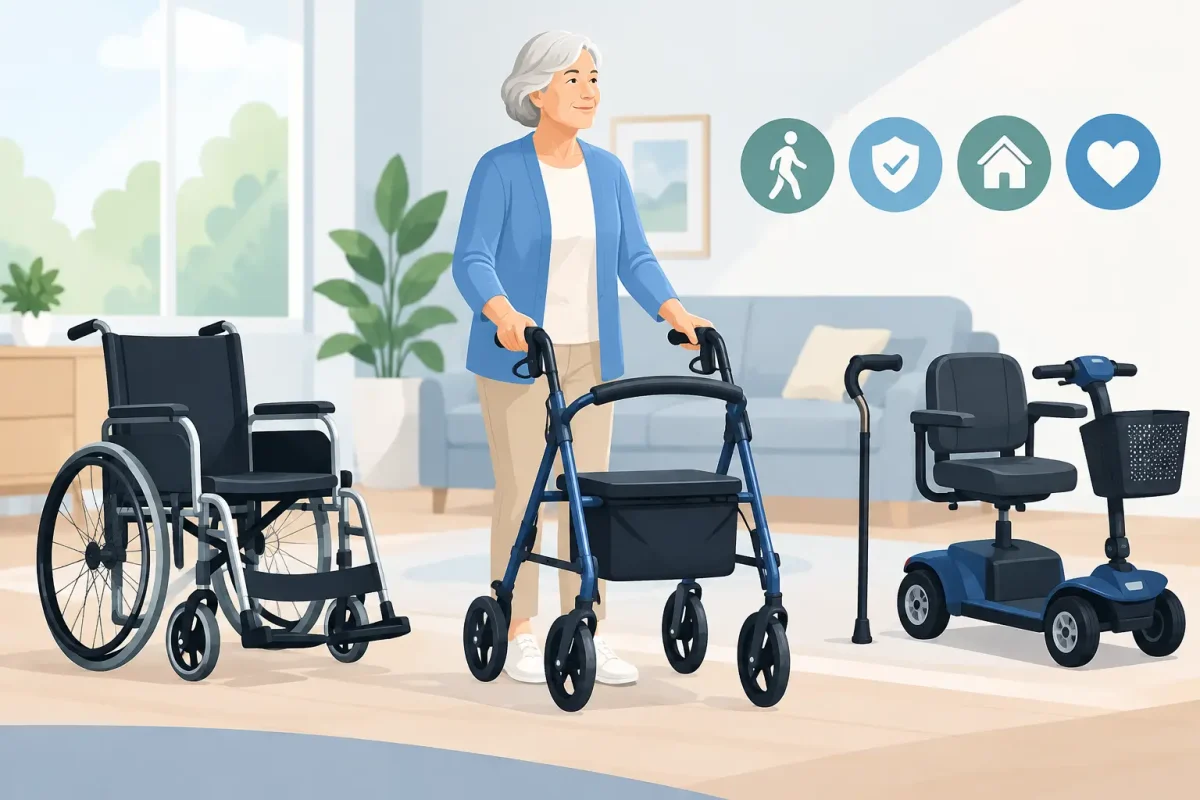
A shower that once took ten minutes can become exhausting when balance changes. A short trip to the letterbox can feel uncertain when pain, weakness or fatigue makes each step harder. The right mobility equipment can make these everyday moments safer and more manageable, while helping a person stay involved in the routines, places and relationships that matter to them.
For many people, choosing equipment is not about giving up independence. It is about finding practical support that makes independence more possible. The best option is always the one that suits the individual, their home, their goals and the support they have around them.
What does mobility equipment include?
Mobility equipment is a broad term for tools that help a person move safely, transfer between positions, manage personal care or access their community. It may be used temporarily after surgery or illness, or as part of ongoing support for disability, ageing or a health condition.
A walking stick, wheeled walker, wheelchair or mobility scooter may be the first items people think of. Yet equipment can also include shower chairs, over-toilet aids, bed rails, transfer boards, lift recliner chairs, pressure cushions and rails near steps. Some items support walking, while others reduce the risk of falls, strain and fatigue during daily activities.
The right equipment should support a person’s abilities rather than take over unnecessarily. For example, a four-wheel walker may help someone continue walking to the local shops with confidence, while a shower chair may allow them to complete more of their personal care independently and safely.
Start with the person, not the product
It is easy to begin with an online search or a recommendation from a friend. However, equipment that works well for one person may be uncomfortable, unsafe or impractical for another. A person’s height, strength, balance, hand function, vision, pain levels and confidence all affect what will be suitable.
Their daily life matters just as much. Consider where they want to go, what they need to do and when they are most likely to need support. Someone who mainly needs stability around the home may have different needs from someone who wants to travel on uneven footpaths, use public transport or attend appointments independently.
Goals should guide the decision. These may include getting safely from the bedroom to the bathroom at night, standing for long enough to prepare a meal, joining family outings, visiting friends or remaining active in the community. A piece of equipment is useful when it creates a practical pathway towards those goals.
Consider the home and local environment
A walker that fits comfortably through a shop aisle may not fit through a narrow bathroom door. A wheelchair may be suitable indoors but difficult to use over gravel, steep driveways or raised thresholds. Before choosing, look carefully at the places where equipment will be used most often.
Measure doorways, hallways and bathroom spaces. Notice loose rugs, uneven flooring, poor lighting, steps and crowded furniture. Think about where equipment can be stored and charged if needed. For people in Newcastle and surrounding NSW areas, it is also worth considering the terrain around home, including sloped paths, uneven outdoor surfaces and access to local services.
Sometimes the answer is not a larger piece of equipment. A small home change, such as a grab rail, non-slip flooring or improved lighting, may make movement easier. In other situations, equipment and home modifications work best together.
Choosing mobility equipment safely
Safety does not mean choosing the most restrictive option. It means choosing equipment that is stable, correctly fitted and appropriate for the task. A walking aid that is too high can cause shoulder strain. One that is too low may encourage poor posture and increase the chance of a fall.
Professional assessment is particularly valuable where a person has had recent falls, experiences dizziness, has changing health needs, uses oxygen or other medical devices, or requires assistance from another person to transfer. Occupational therapists and physiotherapists can assess movement, recommend suitable equipment and provide advice about set-up and safe use.
Trials are often helpful. If possible, try equipment in the environment where it will be used. Check whether brakes are easy to operate, whether a seat is comfortable, whether the person can turn safely, and whether they can use the item without feeling rushed or unsteady. Comfort matters because equipment that feels awkward or embarrassing is less likely to be used consistently.
For some people, a lightweight frame is easier to lift into a car. For others, a heavier model may offer more stability. A scooter can increase community access, but it needs secure storage, charging space, suitable paths and confidence managing pedestrian areas. There is rarely one perfect choice without trade-offs, which is why individual advice is so valuable.
Safe transfers need equal attention
Moving from a bed to a chair, from a toilet to standing, or in and out of a car can be one of the highest-risk parts of the day. Equipment such as transfer boards, bed poles, raised toilet seats and shower commodes may reduce strain for both the person and the family member or support worker assisting them.
A transfer aid should never be used without clear instruction if the person has limited weight-bearing ability, unpredictable balance or complex needs. Incorrect use can lead to injury. The right technique, a calm pace and enough time are just as important as the equipment itself.
Building confidence through regular use
New mobility equipment can take time to feel natural. A person may worry about looking different in public, feel frustrated by reduced speed, or be concerned about relying on an aid. These feelings are understandable and deserve patience, not pressure.
Practising at home first can help. Start with short, familiar distances and build confidence gradually. A support worker, family member or trusted friend can walk alongside the person, without taking over, while they learn to use brakes, navigate corners and manage small changes in surfaces.
It also helps to keep equipment within easy reach. A walking frame left in another room is unlikely to be used during a late-night bathroom trip. A shower chair that is stable, clean and correctly positioned can make a regular routine feel less stressful. Small practical details often have the biggest impact on safety.
Maintaining equipment and reviewing needs
Mobility needs can change after a fall, hospital stay, medication change or decline in strength. Equipment should be reviewed when it no longer feels safe or comfortable, even if it was suitable six months ago.
Regular maintenance is essential. Check brakes, wheels, handles, tyres, footplates and batteries according to the supplier’s guidance. Keep walking aid tips clean and replace them when worn. Make sure wheelchairs and scooters are serviced by an appropriate provider. If an item is damaged, unstable or causing pain, stop using it until it has been checked.
For NDIS participants, some mobility-related supports may be considered under an approved plan where they are reasonable and necessary and connected to disability support needs. The right pathway depends on the individual plan, goals and equipment required. A support coordinator, allied health professional or provider can help clarify what information may be needed before making a request or purchase.
Everyday support that works around the equipment
Equipment is most effective when it fits naturally into a person’s day. This may mean allowing extra time for a safe morning routine, arranging transport that can accommodate a wheelchair, or providing support to attend appointments, shopping trips and social activities with confidence.
At Acme Living Care Australia, support is tailored around the person, not just the task. Our team can assist with daily routines, community access and practical skill-building while respecting each person’s preferences, pace and independence. Consistent support can make it easier to use equipment confidently and stay connected to the life they choose.
The most helpful next step is often a simple conversation about what is becoming difficult and what the person would like to keep doing. With the right advice, equipment and respectful day-to-day support, home can remain a place of comfort, safety and possibility.