
What Is In Home Support and Who Is It For?
June 23, 2026
Difference Between Care Home and Supported Living
June 25, 2026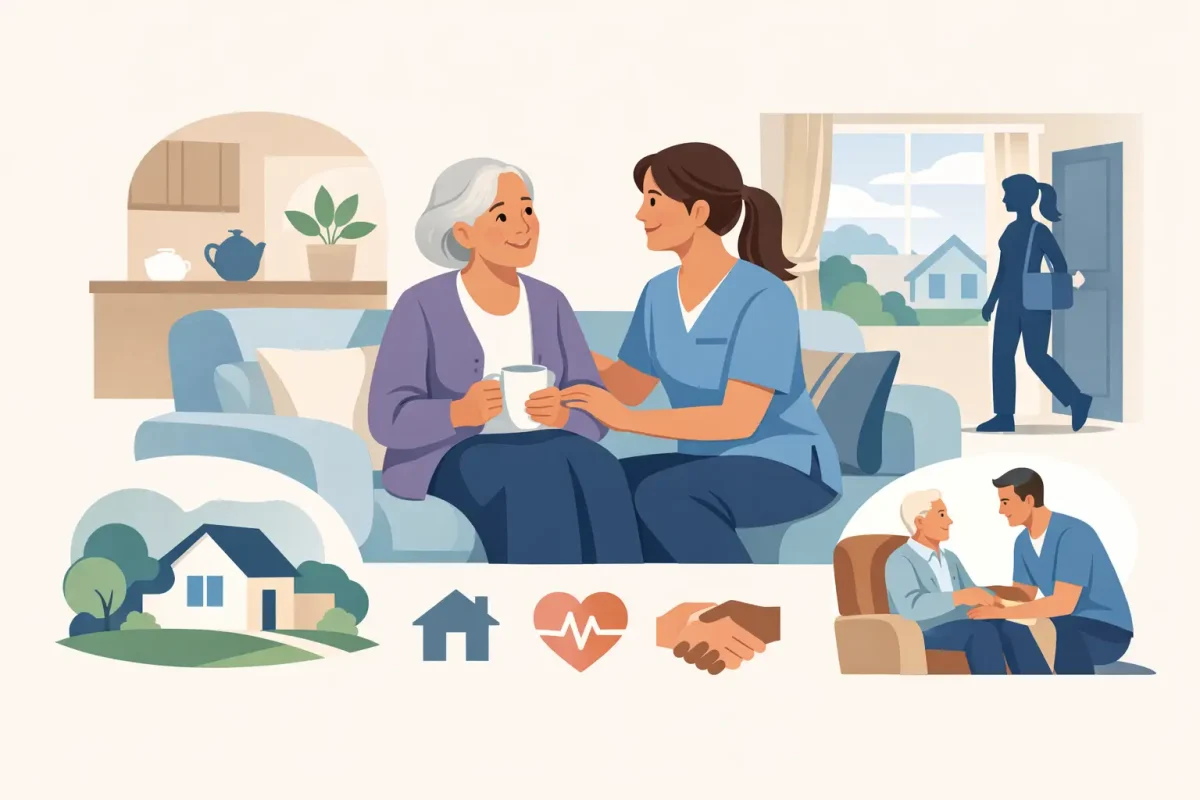
When someone you care about needs support morning, night and in between, the usual short visits may stop being enough. That is often when families start asking, what is live in home care, and whether it could make daily life safer, calmer and more comfortable at home.
Live in home care is a type of ongoing support where a carer stays in the person’s home to provide regular help across the day and overnight. It is designed for people who want to keep living in familiar surroundings while receiving consistent, personalised care. Depending on the person’s needs, that support might include personal care, meal preparation, medication prompts, household tasks, mobility support, companionship, community access, or more complex assistance.
For many people, the biggest benefit is continuity. Rather than seeing multiple workers for short visits, live in care can offer a steadier routine and a stronger sense of trust. Home still feels like home, but with practical support built around the person’s day-to-day life.
What is live in home care and how does it work?
At its heart, live in home care means support happens where life already happens – in the home, with familiar routines, preferred meals, treasured belongings and the comfort of a known environment. A live in support worker or team helps with everyday tasks and remains available across agreed hours, including overnight support where required.
How it works in practice depends on the person’s goals and support needs. Some people need help getting ready in the morning, preparing meals, taking medication and getting to appointments. Others need hands-on support with transfers, continence care, behaviour support, mobility, or supervision throughout the day. For seniors, it can be a way to stay safely at home instead of moving into residential care. For NDIS participants, it can support independence, routine, skill-building and community participation.
The detail matters here. Live in home care is not always a single worker on duty every hour of every day. In many cases, care is delivered by a small, consistent team working in shifts so support remains safe, reliable and sustainable. That is especially important where higher needs, manual handling, active overnight support or complex care are involved.
What support is usually included?
Live in home care can cover a wide range of daily support, but it should never feel generic. Good care is tailored to the person, not forced into a standard checklist.
A typical arrangement may include help with showering, dressing, grooming and toileting, along with preparing meals, doing the washing, changing bed linen and keeping the home tidy. It can also include medication assistance, transport to appointments, support to attend social activities, help with shopping, and company throughout the day so the person does not feel isolated.
For some people, support also focuses on building skills rather than doing everything for them. That might mean encouraging someone to take part in cooking, managing their own routine, improving confidence in the community, or practising everyday tasks in a way that supports independence.
Where care needs are more complex, the service may involve behaviour support implementation, mobility assistance, mealtime support, continence care, pressure care, or 24/7 supervision. The right level of care depends on the person, the home setup, risk factors, and what helps them live well.
Who is live in home care best suited to?
Live in home care can be a strong option for seniors, people living with disability, and individuals recovering from illness or injury who need more than occasional assistance. It tends to suit people who want to remain in their own home but need regular support to do so safely.
It can be especially helpful when family carers are stretched, when a person’s needs have increased, or when there are concerns about falls, medication management, wandering, reduced mobility or social isolation. It may also suit someone who finds change distressing and benefits from the stability of familiar surroundings and a consistent support team.
That said, live in care is not automatically the right fit for everyone. Some people only need a few hours of support each week, while others may require clinical or highly specialised care that involves a broader team. The best approach depends on support needs, funding, preferences, and what kind of daily routine will feel most respectful and workable.
What is live in home care compared with standard home care?
This is where families often need clarity. Standard home care usually involves carers visiting for short, scheduled shifts. That might be enough for assistance with showering, cleaning, transport or meal preparation a few times each week.
Live in home care is different because the support is more continuous and woven through the person’s day. There is more presence, more consistency and often more flexibility if routines change. If someone needs support at multiple points across the day, or reassurance overnight, short visits can start to feel fragmented. Live in care can create a more natural rhythm.
There are trade-offs, though. More comprehensive care generally means a higher level of planning and funding. The home also needs to be suitable for worker accommodation or shift arrangements. For that reason, a proper assessment is important before deciding whether this model is practical.
The value of staying at home
For many people, the question is not just about what care is available. It is about where they feel most like themselves.
Home carries routine, privacy and identity. It is the place where someone knows where everything is, where they can sit in their favourite chair, hear familiar neighbourhood sounds, and keep living in a way that feels normal. That can make a real difference to confidence and emotional wellbeing.
Live in home care supports that sense of stability while reducing the pressure of everyday tasks that may have become difficult or unsafe. It can also ease stress for families who want reassurance that their loved one is not facing each day alone.
For NDIS participants, staying at home with the right support can strengthen choice and control. For older Australians, it can preserve dignity and routine. In both cases, the goal is not just care for care’s sake. It is support that helps life keep moving in a way that feels safe, respectful and personal.
What to look for in a provider
If you are considering live in home care, the quality of the provider matters as much as the service itself. Consistency, communication and the ability to tailor support will shape the day-to-day experience.
A good provider will take time to understand the person’s routine, health needs, preferences, cultural background, communication style and goals. They should explain clearly who will be providing care, how rosters are managed, what happens if a regular worker is unavailable, and how changes in support needs are reviewed.
It also helps to ask how the provider matches staff to participants. Trust does not happen by accident. It grows when support is delivered by people who are respectful, reliable and genuinely suited to the person they are supporting.
If the person has NDIS funding or aged care support, the provider should also be clear about what can be included, what documentation may be needed, and how the service aligns with the person’s plan and outcomes.
A practical next step for families and coordinators
If you are still weighing up options, start with the person’s everyday reality. Where are the hard points in the day? Is support needed only for certain tasks, or is there growing pressure across mornings, evenings and overnight? Is the current arrangement helping the person feel confident and settled, or is it becoming stressful and patchy?
Those answers usually point towards the right level of care. Live in home care is not about taking over someone’s life. It is about putting the right support around them so they can keep living it, with more safety, more comfort and more dignity.
For families, carers and support coordinators across Newcastle and surrounding NSW, having a local provider who can adapt support as needs change makes a real difference. At Acme Living Care Australia, that means practical help delivered with warmth, consistency and respect – care that is shaped around the person, so home can keep feeling like home.
If you are asking what is live in home care for someone you love, the most helpful next step is a real conversation about their routine, goals and support needs. The right care should feel personal from the very beginning.