
Social Support for Seniors Staying Connected
October 1, 2026
How to Read NDIS Provider Reviews With Confidence
October 5, 2026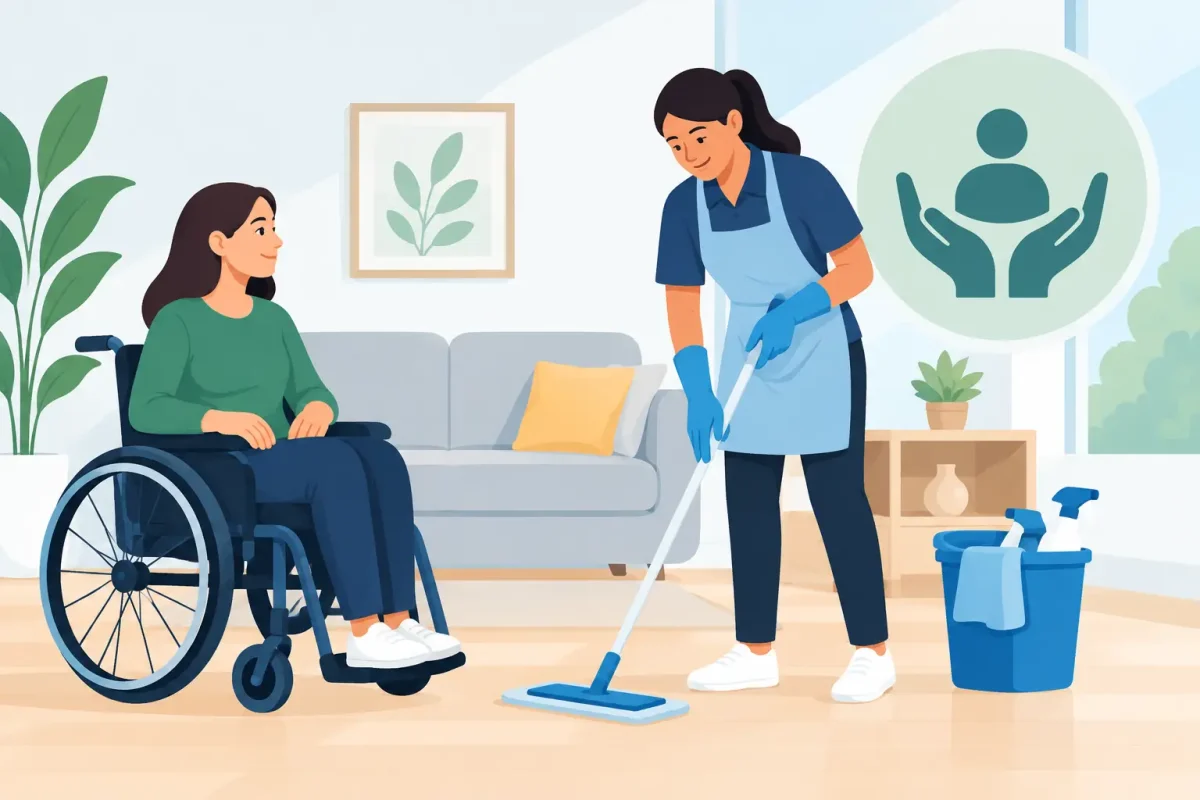
A pile of washing, an unclean bathroom or floors that have become difficult to manage can affect far more than the appearance of a home. For many people, these tasks can become a barrier to safety, comfort and independence. So, does NDIS pay for cleaning? It can, where cleaning support is directly related to your disability and meets the NDIS funding criteria.
The key is that the NDIS does not generally fund everyday household costs that most Australians are expected to pay for themselves. It may, however, fund assistance with cleaning when your disability means you cannot safely complete the task, or cannot do so without substantial difficulty, fatigue or risk.
Does NDIS Pay for Cleaning Under Your Plan?
Cleaning support is commonly funded through Core Supports, usually under Assistance with Daily Life. This category is designed to help participants manage essential everyday activities at home, including household tasks that support a safe and functional living environment.
Your funding may cover a support worker helping with tasks such as vacuuming, mopping, dusting, cleaning bathrooms and kitchens, changing bed linen, doing laundry, washing dishes and taking out rubbish. Support can also include helping you build skills and confidence to complete parts of these tasks yourself, where that aligns with your goals.
Whether cleaning is funded, and how much support is included, depends on your individual circumstances. The NDIA considers whether the support is reasonable and necessary, related to the impact of your disability, and likely to help you pursue your goals and live more independently.
For example, someone with limited mobility may need help to clean floors and bathrooms safely. A person experiencing chronic fatigue, psychosocial disability or sensory overload may need regular household assistance to keep their home manageable. Another participant may benefit from a worker providing prompts, structure and hands-on support while they gradually develop daily living skills.
When Household Cleaning Is More Likely to Be Funded
The strongest case for funded cleaning support is one that clearly connects the task to your disability-related needs. This is not about having a perfectly presented home. It is about having a clean, safe and usable place to live, while maintaining dignity and avoiding unnecessary risk.
Cleaning may be appropriate when you cannot complete household tasks safely because of physical limitations, reduced balance, pain, cognitive impairment, fatigue, mental health challenges or other disability-related impacts. It may also be suitable where doing the task independently would take an unreasonable amount of time or leave you unable to manage other essential parts of your day.
The support should reflect what you need, rather than follow a one-size-fits-all schedule. One person may need a few hours each fortnight for heavier tasks. Another may need more regular assistance with laundry, meal clean-up and bathroom hygiene. If you live with family, a partner or housemates, the NDIS will also consider what informal supports can reasonably provide. Family members should not be expected to take on unsustainable caring responsibilities, but the NDIS does not usually replace ordinary household contributions from other adults in the home.
What Cleaning Support Usually Does Not Cover
There is an important difference between disability-related support and general household expenses. NDIS funding will not usually pay for cleaning that is unrelated to your disability, or for services considered a standard cost of living.
For instance, a general house clean simply because you are busy, working long hours or prefer not to clean is unlikely to meet the criteria. The NDIS also does not generally fund large-scale one-off jobs such as end-of-lease cleaning, bond cleans, cleaning after a party, pest control, rubbish removal, or extensive cleaning required because a property has been neglected.
Some tasks sit in a grey area and need to be considered carefully. Window cleaning, deep cleaning, oven cleaning and outdoor maintenance may be included only where there is a clear disability-related reason and the support is specified or reasonably connected to your plan. Gardening, lawn mowing and home maintenance are separate supports and are not automatically included as part of household cleaning.
If you are unsure, check the wording of your NDIS plan and speak with your support coordinator, plan manager or provider before booking a service. This can help prevent unexpected invoices or using funds in a way that does not match your plan.
How to Include Cleaning in Your NDIS Plan
If you need cleaning support but it is not currently funded, raise it at your next plan reassessment or review. Be clear about what happens when you try to manage the tasks alone. Practical details are useful: perhaps you have fallen while mopping, cannot bend to clean the shower, become overwhelmed by laundry, or experience pain and exhaustion for days afterwards.
It can help to explain the outcome you are seeking, not just the task itself. You may want to live safely in your own home, improve your daily routine, reduce reliance on family, maintain personal hygiene, or have the confidence to invite friends and family over. These are meaningful goals connected to independence and community participation.
Supporting information from an occupational therapist, psychologist, physiotherapist, GP or other allied health professional may strengthen your request where appropriate. Their report can explain how your disability affects household tasks, identify safety risks and recommend the level or type of assistance required.
Your plan may be self-managed, plan-managed or NDIA-managed. The way your plan is managed affects how you arrange and pay for support. Self-managed participants have the greatest choice in who provides services, while plan-managed participants can use registered and non-registered providers in line with their plan. If your plan is NDIA-managed, you generally need to use a registered NDIS provider for funded supports.
Cleaning Can Be Support, Not Just a Service
The right support should feel respectful and practical, not intrusive. A good worker takes the time to understand how you like your home organised, which products you prefer, what areas matter most to you and how involved you want to be.
For some people, this means a worker completes agreed household tasks while they focus their energy on appointments, work, parenting or community activities. For others, it means working alongside someone: sorting laundry together, creating a cleaning routine, practising safe use of equipment or breaking a difficult task into manageable steps. Both approaches can support independence when they are tailored to the participant.
Consistency matters too. Having familiar, reliable support can reduce stress and make it easier to communicate preferences. It also allows workers to notice changes in your needs, such as increasing fatigue, a new mobility issue or tasks that are becoming harder to manage.
At Acme Living Care Australia, household assistance is delivered with this everyday understanding in mind. Support is shaped around your routines, goals and preferences, so care at home can feel more comfortable, dignified and dependable.
Questions to Ask Before Arranging Cleaning Support
Before you begin, ask whether the proposed tasks are covered by your available funding, how often support can be provided, and whether the provider can work with your plan management type. It is also reasonable to ask who will attend your home, whether you can request consistent workers, and how changes to your routine will be handled.
Be specific about your expectations from the beginning. Discuss access to your home, preferred cleaning products, pets, cultural or personal preferences, areas you do not want touched, and whether you would like active skill-building as part of the visit. Clear communication helps make support feel like part of your life, rather than something happening around you.
A clean and manageable home can create more room for the things that matter: resting well, preparing meals, seeing people you care about and feeling in control of your day. If cleaning is becoming difficult because of your disability, asking for the right support is a practical step towards living safely and independently at home.