
24 Hour Disability Care at Home
July 7, 2026
Independent Living Skills Support That Fits
July 9, 2026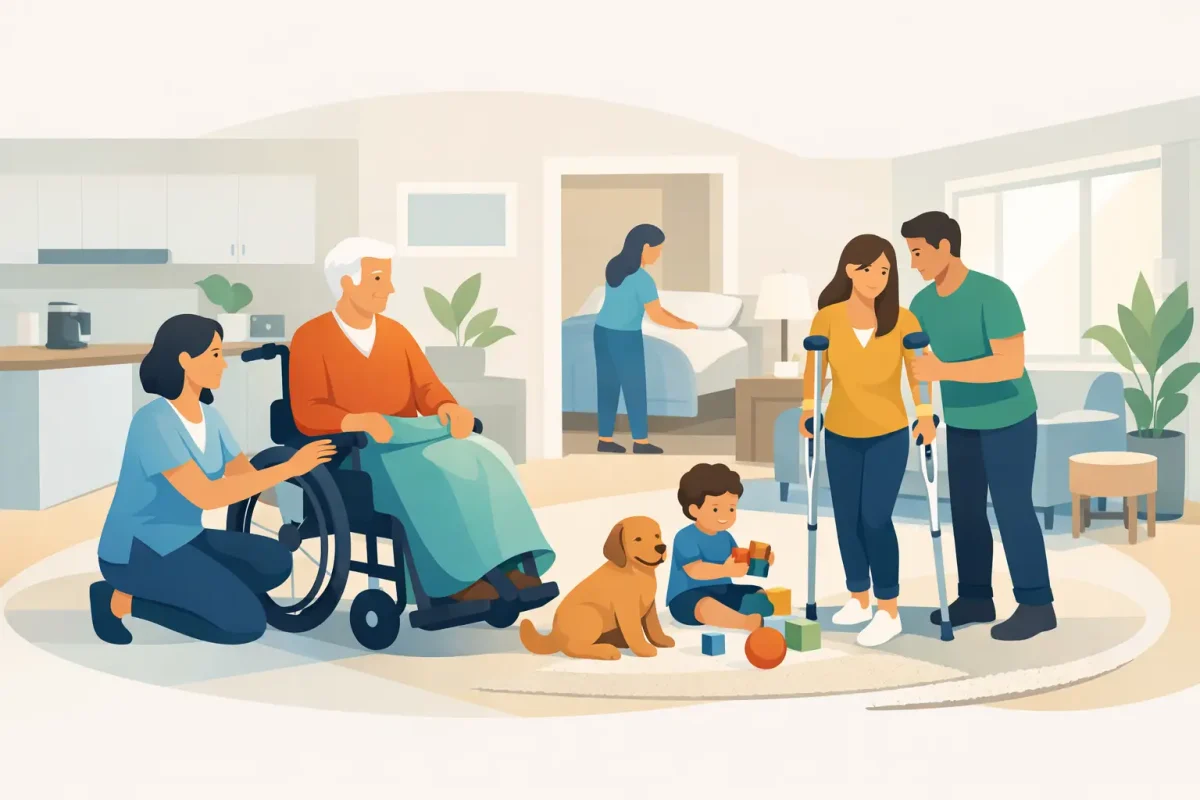
A good support worker does more than help with tasks. They learn how a person likes their morning tea, what makes a routine feel calm, and when to step in or step back. That is what quality in home disability support should look like – practical help delivered in a way that protects dignity, builds confidence, and makes home feel like home.
For many people, support at home is not about doing everything for them. It is about making everyday life more manageable, more consistent, and more comfortable. That might mean help getting ready for the day, support with meals and medication, transport to appointments, or encouragement to get out into the community. The right support creates stability, but it also creates choice.
What in home disability support really means
In home disability support is personalised assistance provided in a person’s own home and, in many cases, beyond the front door as well. It is designed around daily living, health needs, routines, personal goals, and the kind of life someone wants to lead.
That can include personal care such as showering, dressing, grooming, and mobility support. It can also cover household tasks like cleaning, laundry, meal preparation, shopping, and keeping the home safe and comfortable. For some people, support is occasional and focused on a few key tasks. For others, it is part of every day and may include overnight care or 24/7 complex support.
The biggest difference between average care and the right care is whether it fits the person, rather than asking the person to fit the service. Needs can change from week to week. Energy levels can vary. Goals can grow over time. A service that listens and adapts is often the one that makes the most meaningful difference.
Why in home disability support matters so much
Home is where routines happen. It is where people feel most themselves. When support is delivered in a familiar environment, it can reduce stress, improve confidence, and make daily living feel more natural.
There is also a practical side to this. Small tasks that seem simple to others can become exhausting, unsafe, or frustrating without the right help. When someone has reliable assistance with getting up, preparing meals, taking medication, or attending appointments, the whole day often runs better. Families feel reassured. Participants feel more in control.
Good support also helps protect independence rather than replace it. That matters. Many people do not want someone taking over their life. They want respectful assistance that helps them keep doing what they can, while receiving help where it is genuinely needed. Sometimes that means hands-on support. Sometimes it means a gentle prompt, a lift to an activity, or someone nearby for reassurance.
What support can include at home and in the community
Because every person’s situation is different, in home disability support can cover a wide range of day-to-day needs. Personal care is often a starting point, especially when safety, mobility, or health conditions affect morning and evening routines. Support workers may also assist with transferring, continence care, and medication prompts or administration, depending on the arrangement and level of care required.
Household help is another common need. A tidy, well-run home can make a big difference to wellbeing, but keeping on top of chores is not always easy. Support with cleaning, laundry, dishes, changing bed linen, and meal preparation can reduce pressure and make the home more comfortable.
Community access is just as important. Support at home should not lead to a smaller life. Many participants want help getting to appointments, shopping, social outings, classes, or local activities. Building confidence in the community can improve connection, routine, and mental wellbeing.
Some people also want support with skill-building. That could mean learning to cook simple meals, practising public transport use, improving budgeting skills, or developing routines that increase independence over time. In that sense, support is not only about the present. It can also be about future capacity.
Person-centred care makes the biggest difference
The phrase person-centred care gets used often, but it should mean something very practical. It means listening before planning. It means understanding preferences, culture, communication style, health considerations, and personal goals. It means recognising that two people with the same funding category may need very different kinds of support.
For one person, the priority may be getting ready for work each morning with as little stress as possible. For another, it may be reducing falls risk at home. Someone else may want more confidence leaving the house and joining local activities. Good support starts with these real-life priorities, not a generic checklist.
Consistency matters too. Seeing familiar support workers can make personal care feel less intrusive and daily routines more settled. Trust takes time. When participants know who is coming into their home and feel comfortable with that person, support tends to feel more natural and effective.
Choosing the right provider for in home disability support
Finding the right provider is not only about whether services are available. It is about whether the provider understands the person behind the plan. Families and support coordinators often look for responsiveness, reliability, and flexibility, and for good reason. Missed shifts, poor communication, or a one-size-fits-all approach can create stress very quickly.
It helps to ask how care plans are tailored, how staff are matched with participants, and how changes in needs are handled. If someone requires support with complex health needs, provider capability becomes even more important. If social connection is a priority, the provider should be able to support community participation in a way that feels safe and encouraging.
Local knowledge can also be valuable. A provider that understands the Newcastle region and broader NSW communities can often deliver support more consistently and with a better sense of what services, activities, and transport options are actually practical day to day.
When flexible support matters most
Life does not always run to a neat schedule. Appointments change. Health can fluctuate. Family carers sometimes need a break or extra help at short notice. That is why flexibility matters so much in disability support.
Some participants need a few hours of assistance each week. Others need regular daily support. Others may need higher-intensity care, overnight assistance, or ongoing support through changing health conditions. The right provider should be able to respond without making the process feel difficult or impersonal.
This is where relationship-led care stands out. When support workers and providers know the participant well, they can often notice changes early, adjust routines thoughtfully, and communicate clearly with families or coordinators. That kind of continuity can make care feel steadier and less stressful.
Support should feel respectful, not intrusive
Inviting someone into your home is personal. That is true whether the support is light-touch assistance or complex daily care. Respect should be felt in the small moments – knocking before entering a room, asking rather than assuming, following the participant’s routine, and speaking to the person directly.
Dignity is not an extra. It is part of good care. So is the ability to make choices, even on ordinary things like what to wear, what to eat, or when to head out. The best in-home support works alongside the person, not over them.
At Acme Living Care Australia, that means providing practical support that is tailored, dependable, and built around real everyday goals. Whether someone needs help with personal care, household tasks, transport, companionship, or more complex ongoing assistance, the aim is the same – to make daily life safer, easier, and more independent in a way that feels respectful and consistent.
For participants, families, and support coordinators, the right support often comes down to one question: does this service make life easier while still feeling personal? When the answer is yes, home remains not just the place where care happens, but the place where confidence, routine, and independence can keep growing.