
What Is Supported Living Care?
June 22, 2026
What Is Live In Home Care?
June 24, 2026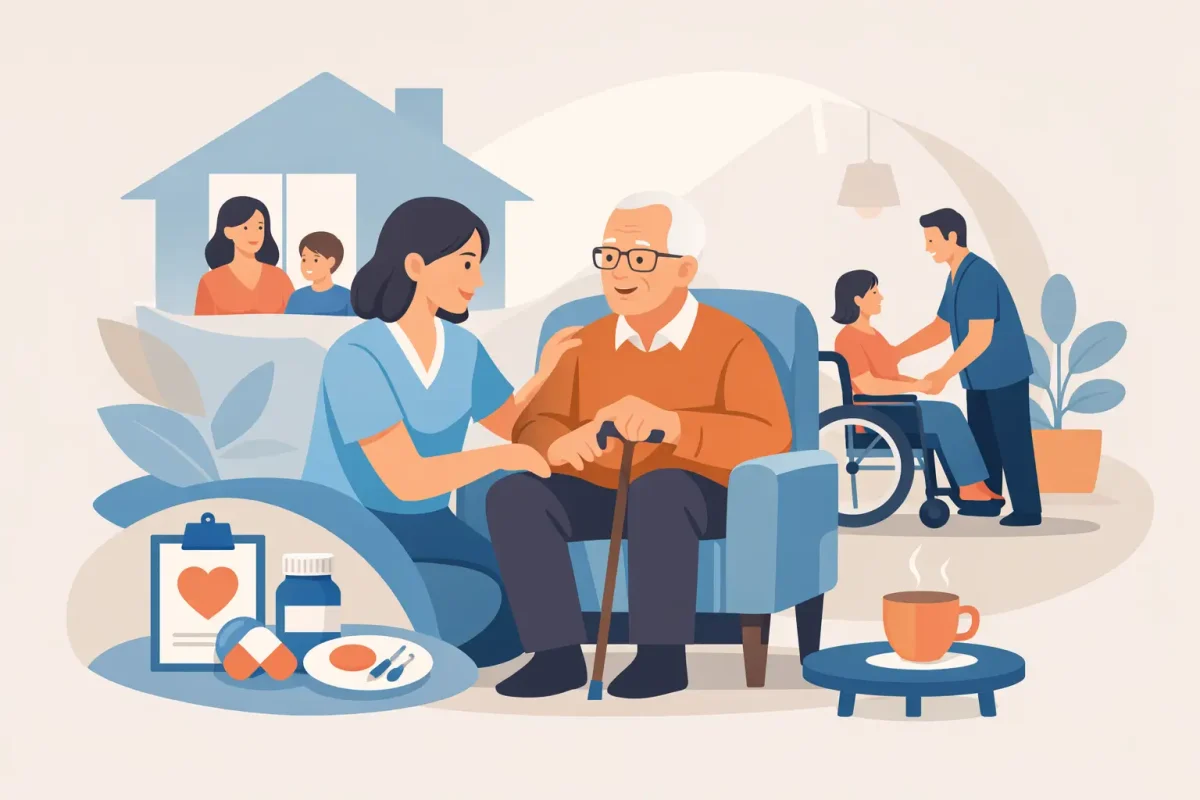
Some people need a hand getting ready in the morning. Others need support with meals, transport, medication, or staying connected to their community. When families ask what is in home support, they are usually really asking something simpler – what kind of help can make daily life safer, easier, and more comfortable at home?
In home support is practical, personalised assistance delivered where a person lives. It is designed to help older Australians and people living with disability manage everyday tasks, maintain independence, and keep living in a familiar environment. The support can be light-touch, such as help with cleaning or shopping, or more involved, such as personal care, mobility assistance, or round-the-clock complex care.
The key point is that it is not one fixed service. Good in home support is shaped around the person, not the other way around.
What is in home support?
In home support is care and assistance provided in a person’s own home to help with daily living, health-related routines, and community participation. Depending on someone’s needs, that may include help with showering, dressing, meal preparation, medication prompts, household tasks, transport to appointments, or support to build confidence with everyday skills.
For some people, this kind of support is about preserving independence. For others, it is about safety, routine, and reducing pressure on family carers. It can also be a way to make sure someone stays socially connected rather than becoming isolated at home.
The phrase covers a wide range of services, which is why it can feel vague at first. The best way to understand it is to think about the day-to-day moments where a person may need support to live well.
What is included in home support services?
In home support often starts with the basics of everyday living. Personal care is one of the most common areas, especially for people who need help with showering, toileting, grooming, getting dressed, or moving safely around the home. This support should always be delivered respectfully, with privacy and dignity at the centre.
Household assistance is another major part of in home support. That can include cleaning, laundry, changing bed linen, tidying living areas, or helping keep the home safe and manageable. These tasks might sound simple, but when they become difficult, the impact on wellbeing can be immediate.
Meal support is also common. Some people need help planning meals, preparing food, or making sure dietary needs are followed. Others may only need someone to assist with grocery shopping and light kitchen tasks. It depends on the person’s mobility, confidence, health needs, and routines.
Medication support can range from reminders through to more involved assistance, depending on what is clinically appropriate and what a person is approved to receive. This matters when missed medication could affect health, comfort, or stability throughout the day.
Transport and community access are often part of the picture too. In home support is not only about what happens inside the house. It can include getting to appointments, attending social activities, going shopping, or taking part in community life. For many people, this support is essential for confidence and connection.
Some providers also offer skill-building as part of daily living support. That might mean helping someone learn to prepare simple meals, manage a routine, build social confidence, or increase independence with tasks they want to do more confidently over time.
For people with higher needs, in home support may include overnight care, behaviour support implementation, mobility assistance, or 24/7 complex care. This level of support requires experience, consistency, and careful planning.
Who is in home support for?
In home support can help a wide range of people. Seniors may use it to continue living at home safely instead of moving into residential care earlier than they want to. NDIS participants may use it to work towards goals around independence, personal care, community access, or routine building.
It can also support people recovering from illness or injury, individuals living with chronic conditions, and families caring for a loved one whose needs are increasing. In many cases, the person receiving support is not the only one who benefits. Family members often gain peace of mind knowing there is reliable, respectful help in place.
That said, not everyone needs the same level of care. One person may need a few hours each week for domestic support. Another may need daily assistance with multiple tasks. There is no single right setup, which is why tailored planning matters.
How in home support helps people stay independent
Some people hear the word support and worry it means losing control. In practice, the right support should do the opposite. It should help a person do more of what matters to them, in a way that feels safe and manageable.
Independence does not always mean doing everything alone. Sometimes it means having the right assistance so that energy can be spent on the parts of life a person values most. A participant might want support with showering so they can still get out to a class. An older person may need help with cleaning so they can stay comfortably in the home they know and love.
There is also a balance to strike. Too little support can leave people at risk, overwhelmed, or isolated. Too much support, delivered without care, can feel intrusive. The best providers take time to understand routines, preferences, communication styles, and goals so the support feels natural rather than imposed.
What to expect from a good in home support provider
A good provider does more than send a worker to complete tasks. They take the time to understand what matters to the person receiving care and how support can fit into real daily life.
That includes listening carefully during the initial conversation, creating a plan that reflects actual needs, and adjusting support when circumstances change. Good care should feel consistent, respectful, and responsive. It should also recognise that trust takes time, especially when support involves personal care or regular visits inside the home.
Continuity matters here. Many participants and families prefer familiar support workers because rapport makes a real difference. A consistent team is often more comfortable for the participant and more effective overall, because workers learn routines, preferences, and small details that help care feel more personal.
Clear communication matters just as much. Families, carers, and support coordinators often need confidence that services will be delivered reliably and that concerns will be addressed promptly. Practical care works best when everyone involved knows what support is being provided and why.
Choosing the right type of support
If you are trying to work out what kind of help is needed, start with the parts of the day that feel difficult, tiring, or risky. It may be morning routines, meal preparation, transport, household tasks, or getting out into the community. Once those pressure points are clear, it becomes much easier to identify the right support mix.
It also helps to think about goals, not just tasks. Someone may ask for cleaning support, but the bigger goal could be staying at home safely. Another person may request transport, but the real aim is maintaining social connection and confidence. Looking at the broader picture usually leads to better, more sustainable support.
For NDIS participants, services should align with plan goals and approved supports. For older Australians, the focus may be on maintaining independence, safety, and quality of life at home. In both cases, the right provider will explain options in plain language and help shape support around the person rather than offering a generic package.
At Acme Living Care Australia, that person-centred approach is at the heart of how in home support should feel – practical, respectful, and built around the life someone wants to live.
When to consider in home support
Often, families wait until things feel urgent. A fall, missed medication, poor nutrition, carer burnout, or increasing isolation can force quick decisions. While support can certainly step in during difficult periods, it is often most effective when introduced earlier, before everyday challenges become bigger problems.
Starting with a small amount of help can make a meaningful difference. It can build confidence, establish a routine, and give everyone time to find the right fit. Support can then increase or change as needs evolve.
If home still feels like the right place to live, but daily tasks are becoming harder to manage alone, that is usually a strong sign that in home support is worth exploring.
The right support does not take away independence. It helps protect it, one ordinary day at a time.