
Transforming Lives: The National Disability Insurance Agency (NDIA)
February 6, 2024
What Is In Home Support and Who Is It For?
June 23, 2026
When people ask what is supported living care, they are usually not looking for a textbook definition. They want to know what life actually looks like day to day – who helps, what gets covered, and whether the support will feel respectful rather than intrusive. That matters, because the right care should make home life easier without taking away choice, routine or dignity.
Supported living care is a flexible style of support that helps a person live as independently as possible in their own home or shared accommodation. It is designed for people who need regular help with everyday tasks because of disability, age-related changes, illness or more complex support needs. The goal is not to do everything for someone. It is to provide the right level of assistance so they can live safely, stay connected to their community and keep as much control over daily life as possible.
What is supported living care in practice?
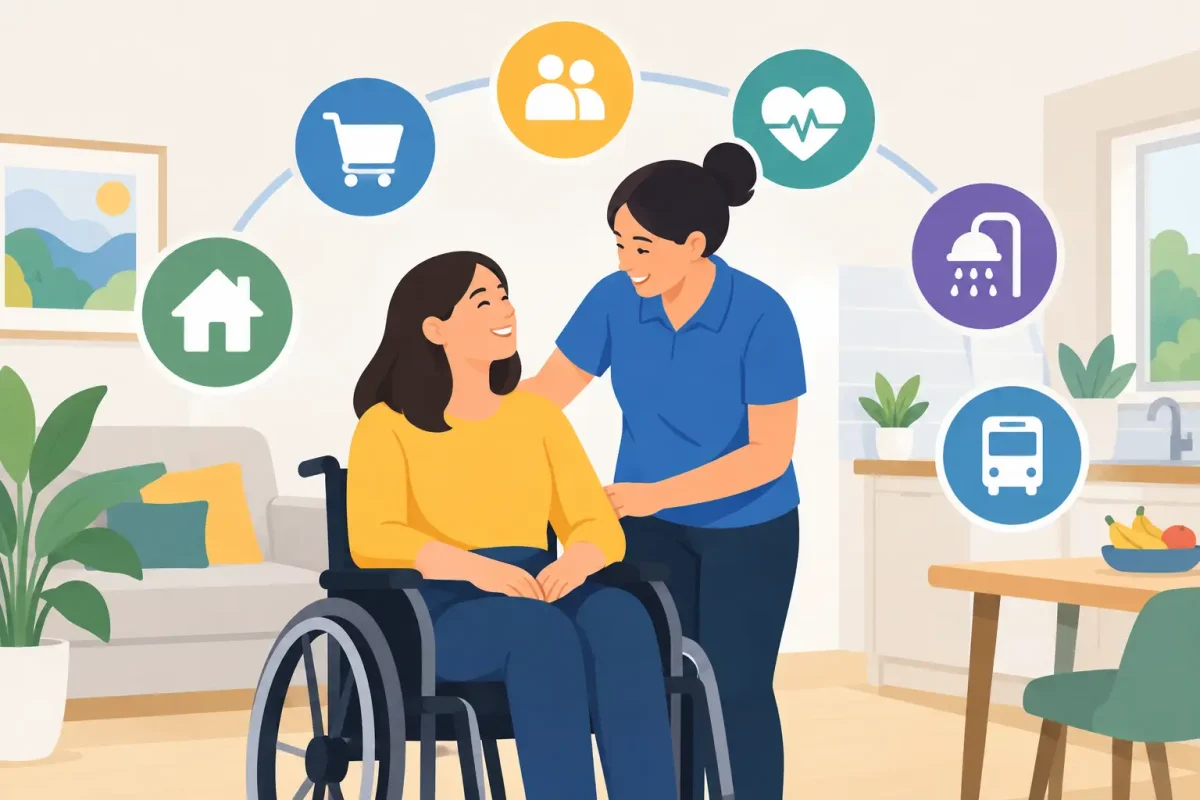
In practice, supported living care can look very different from one person to the next. For one person, it might mean help getting ready in the morning, managing medication and attending appointments. For another, it could involve meal preparation, assistance with household tasks, transport to community activities, and support building confidence with daily routines.
Some people need a few hours of help each week. Others need regular daily support or even 24/7 care. That is why person-centred planning matters so much. Good supported living care is shaped around the individual, not squeezed into a one-size-fits-all schedule.
This kind of support is often delivered in the home because that is where daily life happens. It can also extend into the community, especially when someone wants support to shop, attend social activities, study, work towards goals, or simply get out and about with more confidence.
Who supported living care is for
Supported living care can suit a wide range of people, including adults living with disability, older Australians who want to remain at home, and people recovering from illness or injury who need ongoing help. It can also support families and carers who need reliable assistance around routines that are becoming harder to manage alone.
For NDIS participants, supported living care may form part of a broader plan focused on independence, capacity building and everyday functioning. For older people, it may sit alongside aged care services that help them stay safe and comfortable at home for longer. The exact funding pathway can differ, but the practical purpose is similar – making daily living more manageable and more dignified.
It is worth saying that supported living care is not only for people with high support needs. Many people benefit from lower-level, consistent help that prevents small challenges from becoming bigger problems. A bit of support with meals, mobility, cleaning or personal care can make a real difference to confidence and wellbeing.
What support can be included?
The support included depends on the person’s goals, preferences and needs. Often, supported living care covers personal care such as showering, dressing and grooming, along with household help like cleaning, washing and meal preparation. It may also include medication prompts or assistance, transport, mobility support, companionship, and help joining in with community activities.
For some people, the focus is on maintaining routines and safety. For others, it is about building independence over time. That might mean learning how to prepare simple meals, improving confidence catching transport, or developing daily living skills that lead to greater self-reliance.
There can also be more complex layers of care. Some participants need behaviour support awareness, manual handling assistance, help with continence care, overnight monitoring or round-the-clock support. In those cases, consistency and training are especially important. The provider is not just turning up to complete tasks. They are becoming part of a support system that needs to feel calm, competent and dependable.
The difference between supported living care and standard home care
People sometimes confuse supported living care with general home care, and there is overlap. Both can happen in the home and both aim to improve quality of life. The difference usually comes down to the level of personalisation, the regularity of support, and the focus on long-term independence.
Standard home care can be more task-based. For example, someone may come in to help with cleaning or personal care at set times. Supported living care tends to be broader and more tailored to the whole person. It often includes ongoing assistance with routines, social participation, skill-building and goal-based support, rather than simply completing isolated tasks.
That said, the line is not always sharp. It depends on the provider, the funding arrangement and what the individual needs. What matters most is whether the support genuinely fits the person’s life and helps them feel more capable, comfortable and in control.
Why the right support relationship matters
The quality of supported living care is not only about services on paper. It is also about the relationship with the support workers providing care. When support is personal, trust matters. People often feel more settled when they know who is coming into their home, how that person works, and that they will be treated with respect.
A good match can help care feel natural rather than clinical. It can reduce anxiety, improve communication and make routines smoother. This is especially important for people who need help with personal care, those living with cognitive changes, and participants who rely on regular support across many parts of the day.
Consistency also helps families and support coordinators. When the same team understands preferences, risks, routines and goals, there is less repetition and less chance of details being missed. That kind of continuity can make care feel more like home and less like a service being dropped in from the outside.
What to look for in a supported living care provider
If you are comparing providers, it helps to look beyond broad claims. Ask how care plans are tailored, how workers are matched to participants, and how the provider handles changes in routine or higher support needs. A responsive provider should be able to explain not only what services they offer, but how those services are adapted to the individual.
It is also worth asking about communication. Families, carers and support coordinators often want reassurance that updates will be clear and timely, especially when support is ongoing. Reliability matters just as much as warmth. The best care is both compassionate and well organised.
Availability is another practical issue. Some people need a provider who can offer flexible hours, regular daily visits or 24/7 care as needs change. Others need support that stays local, so travel is manageable and continuity is easier to maintain. For people in Newcastle and surrounding NSW communities, working with a local team can make support more responsive and personal.
What is supported living care meant to achieve?
At its best, supported living care helps someone live life on their terms. That might mean staying in their own home, keeping familiar routines, maintaining community connection, or building skills that create more independence over time. For some, success looks like greater confidence with daily tasks. For others, it is the peace of mind that comes from knowing help is there when it is needed.
The outcomes are not always dramatic, and that is fine. Being able to get through the day safely, comfortably and with dignity is meaningful. So is reducing pressure on family carers, preventing isolation, and making everyday life feel steadier.
This is where personalised support really counts. A service that listens well can adjust as needs shift, whether that means increasing support, changing routines, or focusing on new goals. Acme Living Care Australia approaches supported living this way – as practical, respectful help that fits around the person, not the other way around.
If you are trying to work out whether supported living care is right for you or someone close to you, start with the daily realities. Where is help needed? What would make life feel safer, easier or more independent? The right support should answer those questions with care that feels steady, human and genuinely helpful.